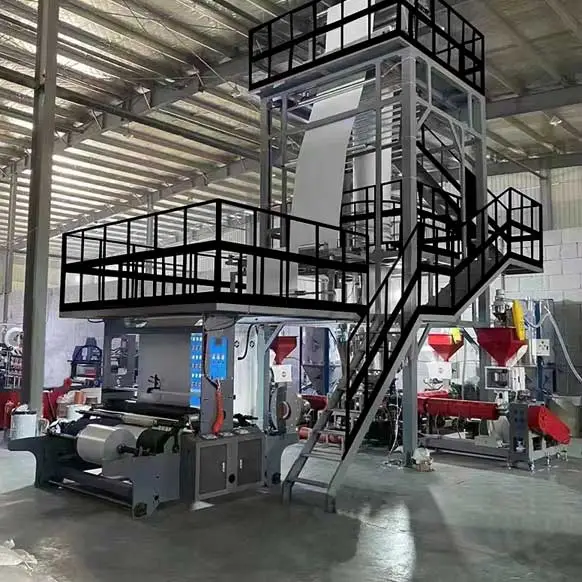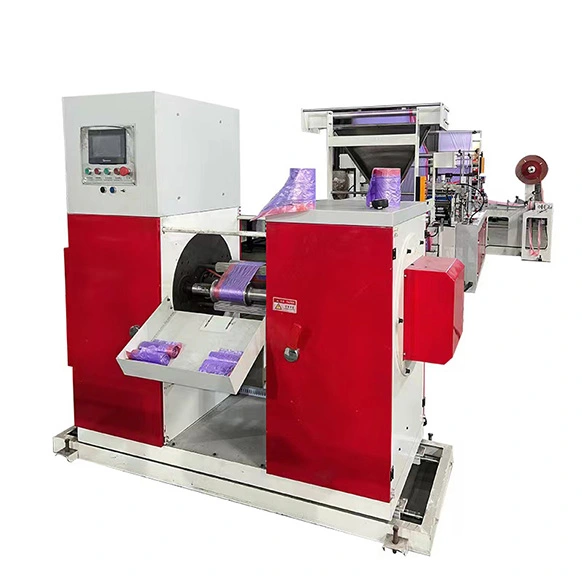
- > Search By Functions
- > Co-Extrusion
- > Search By Material
- > Search By Machines
- > Search By Machines
- > Search By Machines
What are you looking for?
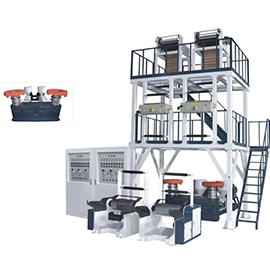
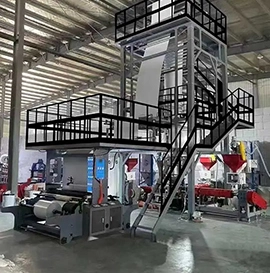
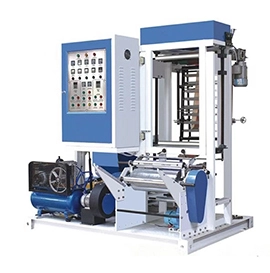
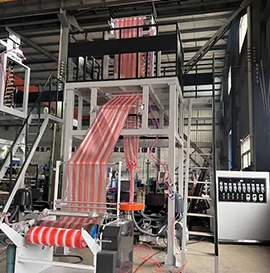
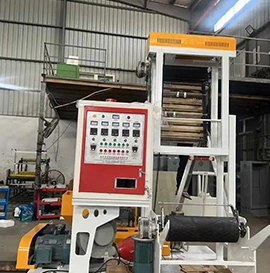
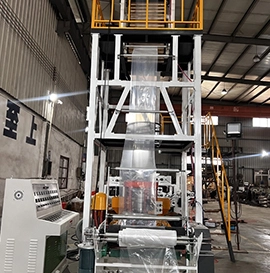
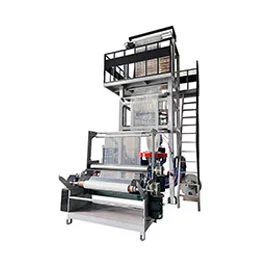
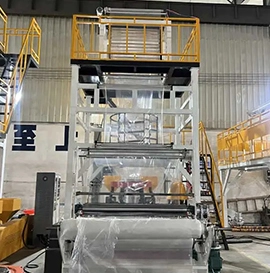
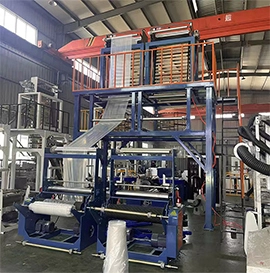
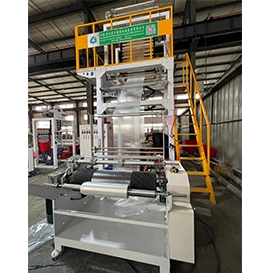
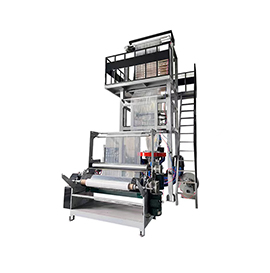
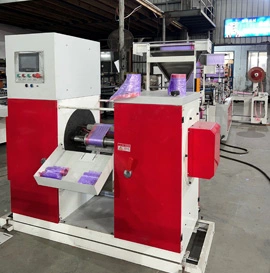
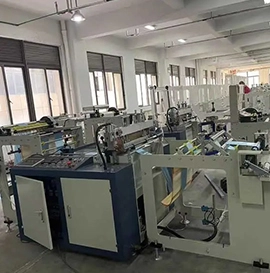
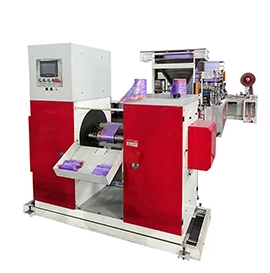
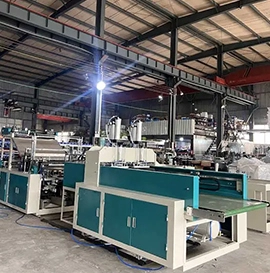
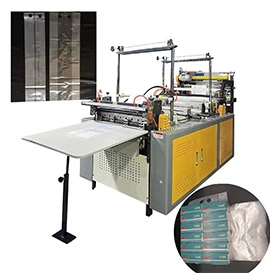
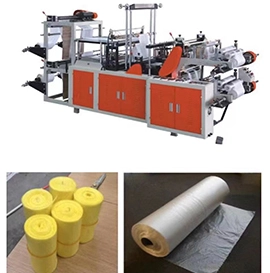
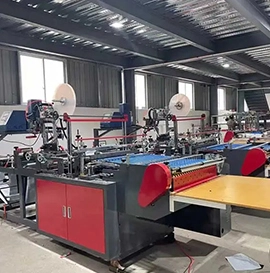
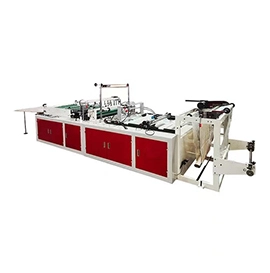
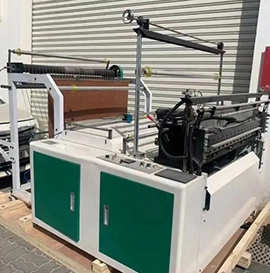
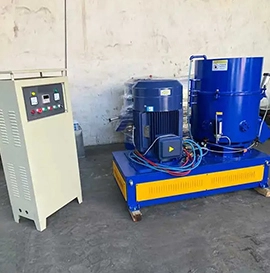
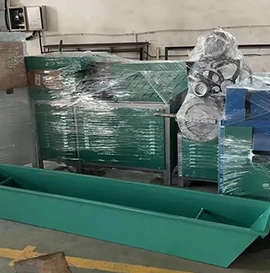
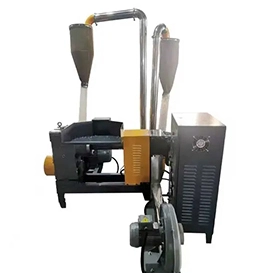
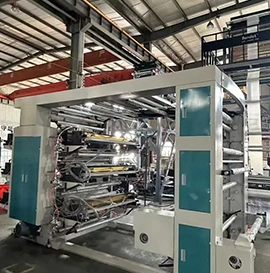
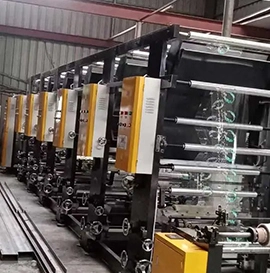

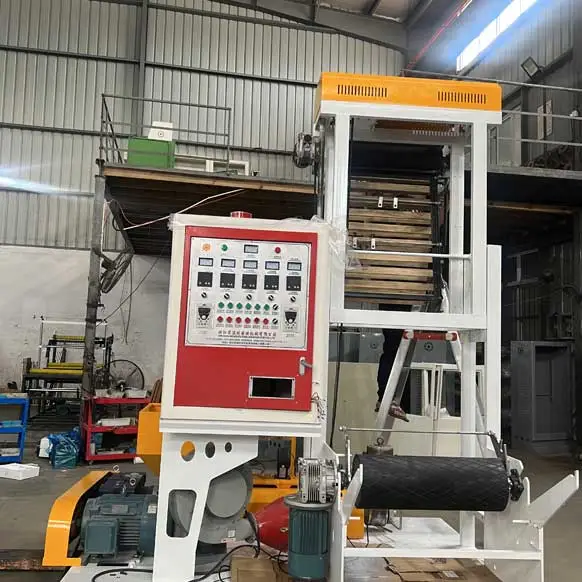
A double color film blowing machine is designed to produce films containing two different colors within a single extrusion process. By combining multiple polymer streams through specialized die-head technology, manufacturers can create visually distinctive films that improve product appearance, brand recognition, product classification, and packaging functionality.
Compared with conventional single-color film production, double-color technology offers greater product differentiation while maintaining efficient manufacturing processes. It has become increasingly popular in shopping bags, garbage bags, courier packaging, agricultural films, and promotional packaging applications.
This guide explains how double-color film blowing technology works, its key components, advantages, limitations, and the industries where it delivers the greatest value.
A double color film blowing machine is a blown film extrusion system designed to process two separate color formulations simultaneously.
Instead of producing a film with a uniform appearance, the machine creates films featuring:
Two-color stripes
Side-by-side color separation
Layered color structures
Customized visual effects
Brand-specific color combinations
The machine typically utilizes:
Two extruders
Dual material feeding systems
Specialized coextrusion die heads
Independent temperature controls
This configuration allows manufacturers to combine different colors without requiring secondary printing operations.
The production process follows the same basic principles as traditional blown film extrusion but incorporates multiple material streams.
Each hopper receives a different resin formulation.
For example:
| Extruder | Material |
|---|---|
| Extruder A | White HDPE |
| Extruder B | Red HDPE |
Color masterbatch is mixed with the base resin according to product requirements.
Each extruder independently melts and plasticizes its material.
Critical parameters include:
Barrel temperature
Screw speed
Melt pressure
Material consistency
Stable processing conditions ensure color consistency throughout production.
The two molten streams enter a specially designed die.
The die combines the materials into a single film structure while maintaining color separation.
Depending on die design, manufacturers can create:
Color A | Color B
A | B | A | B
Outer Layer A
Inner Layer B
Compressed air inflates the molten tube into a film bubble.
The bubble is stabilized through:
Air rings
Bubble cages
Stabilization frames
Maintaining bubble stability is particularly important when producing films with multiple color zones.
The film cools, collapses, and is wound into rolls for further processing.
The finished product can then be:
Printed
Converted into bags
Laminated
Cut and sealed
Used directly
Different applications require different color configurations.
One of the most common structures.
Advantages
Strong visual impact
Easy product differentiation
Cost-effective production
Applications include:
Shopping bags
Promotional bags
Retail packaging
Colored stripes are incorporated into the film.
Advantages
Brand identification
Product coding
Decorative packaging
Common uses include:
Garbage bags
Agricultural films
Industrial packaging
Different colors are assigned to different film layers.
Advantages
Premium appearance
Improved visual depth
Functional layer differentiation
Frequently used in specialty packaging products.
Understanding machine components helps buyers evaluate equipment quality.
Two independent extruders provide:
Separate color control
Independent output adjustment
Better process stability
High-quality extruders improve color consistency and reduce material waste.
The die head is the most important component.
It determines:
Color separation quality
Layer distribution
Film uniformity
Product appearance
Poor die design often results in:
Color bleeding
Uneven thickness
Visual defects
Precise temperature management ensures:
Stable melt flow
Consistent color distribution
Better film quality
Advanced machines use digital PLC-based temperature control systems.
The air ring directly influences:
Bubble stability
Film transparency
Thickness consistency
Modern dual-lip air rings provide superior cooling performance.
Automatic winding systems improve:
Production efficiency
Roll quality
Labor productivity
They are especially beneficial for high-volume manufacturing operations.
Visual differentiation is one of the biggest advantages.
Packaging with multiple colors often attracts greater consumer attention compared with plain films.
Many designs can be incorporated directly into the film structure.
Benefits include:
Lower printing costs
Faster production cycles
Reduced processing steps
Brand-specific color combinations make products easier to identify.
Examples include:
Retail shopping bags
Promotional packaging
Chain-store packaging
Manufacturers can create customized packaging solutions without significantly increasing production costs.
This helps businesses compete in crowded markets.
Many buyers perceive multi-color packaging as more premium.
This perception can justify higher selling prices.
Retail chains often use color combinations to reinforce brand identity.
Typical examples include:
Supermarket bags
Boutique shopping bags
Promotional packaging
Colored stripes help differentiate:
Waste categories
Bag sizes
Product grades
This is particularly useful for commercial waste management systems.
Logistics companies often require unique colors for:
Brand identification
Security recognition
Sorting efficiency
Color coding can help distinguish:
Crop types
Product specifications
Seasonal applications
Manufacturers use color differentiation for:
Product classification
Safety identification
Inventory management
Most modern double-color systems process a wide range of materials.
Commonly used for:
Shopping bags
T-shirt bags
Produce bags
Suitable for:
Flexible packaging
Soft films
Industrial liners
Provides:
Improved strength
Better puncture resistance
Enhanced flexibility
Many manufacturers incorporate recycled materials to reduce costs and improve sustainability.
| Feature | Single Color | Double Color |
|---|---|---|
| Visual Appeal | Standard | Enhanced |
| Product Differentiation | Limited | Excellent |
| Brand Recognition | Moderate | Strong |
| Machine Cost | Lower | Higher |
| Production Complexity | Lower | Moderate |
| Product Value | Standard | Higher |
| Printing Requirements | Greater | Reduced |
Although double-color machines require higher initial investment, they often create greater opportunities for product differentiation and premium pricing.
Consider whether customers value appearance and branding.
For commodity films, a single-color machine may be sufficient.
For retail packaging, double-color technology often provides competitive advantages.
Higher production volumes generally justify investment in advanced equipment.
Evaluate:
Virgin resin consumption
Color masterbatch costs
Recycled material utilization
A well-designed process minimizes unnecessary material expenses.
Many manufacturers purchase double-color equipment to enter higher-value packaging markets.
Future product strategy should influence equipment selection.
In most cases, yes.
Independent extrusion systems provide better color control and production stability.
Many modern systems allow operation using only one extruder when needed.
This provides additional production flexibility.
Not necessarily.
Film strength depends primarily on:
Material selection
Layer design
Processing parameters
Properly configured double-color films can achieve excellent mechanical properties.
Yes.
Many manufacturers use recycled polyethylene in selected layers or color sections to reduce production costs.
A double color film blowing machine is an excellent investment for manufacturers seeking greater product differentiation, stronger brand visibility, and higher-value packaging solutions.
Compared with standard single-color film production, double-color technology offers enhanced visual appeal, reduced printing requirements, and greater flexibility in product design. These advantages make it particularly valuable in retail packaging, courier bags, garbage bags, agricultural films, and promotional packaging applications.
When selecting a machine, focus not only on output capacity but also on die-head quality, color control capability, automation level, material compatibility, and long-term maintenance requirements. The right equipment can significantly improve production efficiency while helping your products stand out in increasingly competitive packaging markets.
What is the main advantage of a double color film blowing machine?
It allows manufacturers to produce visually distinctive films without relying entirely on secondary printing processes.
Can double-color films be printed afterward?
Yes. Most films can still undergo flexographic or gravure printing after extrusion.
Which industries benefit most from double-color films?
Retail packaging, shopping bags, courier bags, garbage bags, and agricultural packaging are among the most common applications.
Does a double-color machine consume more energy?
Energy consumption is typically higher than a single-color machine because of the additional extrusion system.
Is a double-color film blowing machine suitable for small manufacturers?
Yes, especially for companies targeting customized packaging, branded products, or higher-value packaging markets where visual differentiation is important.